
Great Lakes Credit Union Becomes First Institutional Credit Union Partner of Synergies SEED Fund
GLCU’s partnership expands access to entrepreneur funding.
Introducing Financial Fundamentals For Entrepreneurs
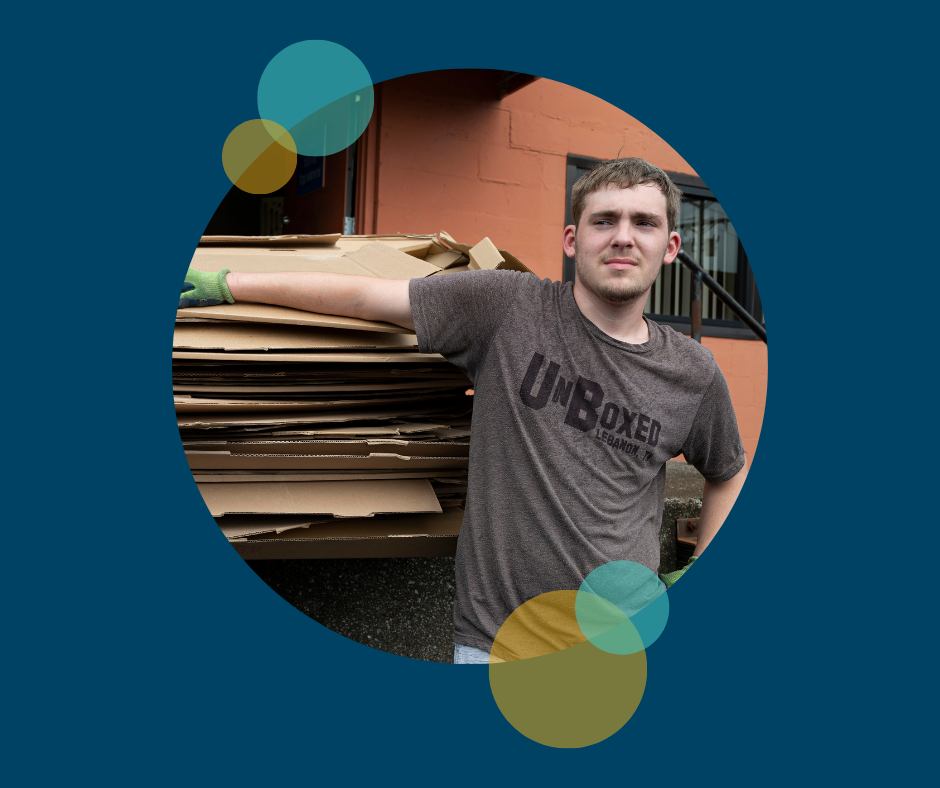
Clarity, confidence, and systems for a financially strong business.
Applications Are Open For The 2027 EDDIE Awards
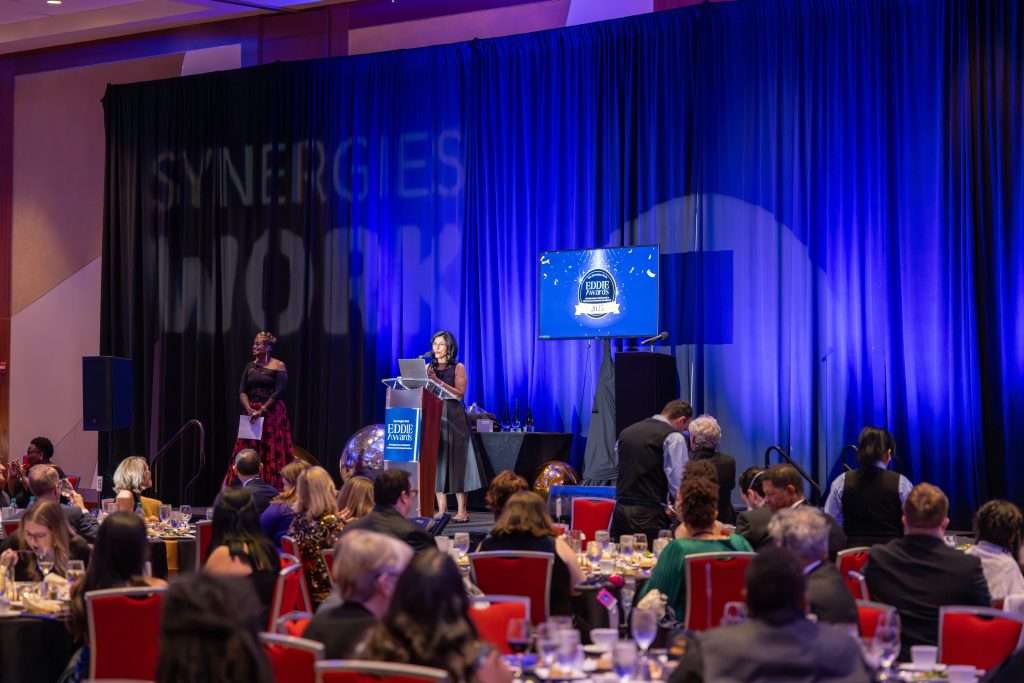
Apply now for the 2027 EDDIE Awards
What Beartown Taught Me About Belief

Last weekend, I reached for a book I’d already read: Beartown by Fredrik Backman. Nothing new was on my nightstand, so I pulled it off the shelf. I’m glad I did. One line stayed with me: “One of the plainest truths about both towns and individuals is that they usually don’t turn into what we tell them to be, but what they are told they are.” That struck me because it captures so much of what I’ve witnessed. For too long, people with disabilities have been told, directly and indirectly, who they are and what to expect from life. Rarely are they described as innovative, entrepreneurial, resilient, or visionary. Too often, they’re seen through the lens of what they need, not what they have to offer. Over time, those messages shape how people see themselves. Expectations become beliefs. Beliefs become boundaries that people stop believing they can cross. This is why our work at Synergies Work goes beyond entrepreneurship. We are changing the narrative. Disability and innovation belong in the same sentence. So do disability and leadership. At Igniting Ideas, participants are founders. Not clients. Not case studies. Founders. They learn business skills, but the real skill is subtler: believing in themselves enough to change the words they use to describe themselves. That’s the value Synergies Work was built on. Maybe the greatest barrier isn’t a disability. It’s the expectations placed on people for generations. I believe the best books are like old friends. They find you when you need them most and quietly remind you why you do what you do. — Aarti
You Can’t Unsee What’s Possible

Remember. Reconnect. Reimagine. Every July, we celebrate the Americans with Disabilities Act as one of the most significant civil rights laws in our nation’s history. We often remember it through the ramps, curb cuts, accessible buses, interpreters, and other visible changes that reshaped our communities. But those changes reflected something much deeper: the belief that people with disabilities belong—in schools, workplaces, neighborhoods, and every part of community life. Accessibility was never the destination. It was the means to something much greater: a foundation for bigger dreams and higher expectations. Remember. Recently I rewatched Crip Camp, the documentary that traces the roots of the disability rights movement. What stayed with me wasn’t simply the history. It was the reminder that before there was a law, there was a movement. And before there was a movement, there was a belief. Judith Heumann and countless others refused to accept the story society had written for them. They challenged the idea that exclusion was inevitable and imagined a different future. The law came later. First came the courage to believe that a different future was possible. That is what I find myself thinking about as the Americans with Disabilities Act turns 36 this month. The ADA answered one question brilliantly: people with disabilities belong in American life. It opened schools, workplaces, public transportation, and communities in ways that transformed this country. That question was settled with remarkable moral clarity. But thirty-six years later, another question remains largely unanswered. What does it mean to belong in the economy? Belonging to a place and belonging to an economy are two very different things. You can enter a building and still be locked out of the capital to build one. The ADA opened doors. It did not guarantee ownership, investment, or wealth. Those questions were left for the generations that followed. Reconnect. This summer I watched Angad present LetMeDoIt — his decision autonomy and financial inclusion platform — to a room full of venture capitalists. I watched him share a closing plenary at a national conference alongside other entrepreneurs. He is the only person with Down syndrome on those stages. Those moments didn’t happen because of one family or one organization. They happened because thousands of people over decades believed that people with disabilities belonged, and they acted on that belief. The ADA created the legal floor. The movement created the expectation. And somewhere in the space between expectation and reality, Angad found room to build something. That is what this anniversary asks us to reconnect with — not the law itself, but the original conviction behind it. The one that said exclusion is not inevitable. The one that refused to accept the story as written. Reimagine. Every generation inherits unfinished work. The generation before us reimagined education, transportation, employment, and community life. They refused to accept segregation and exclusion as inevitable, and because they did, the next generation entered a world with possibilities that would once have seemed unimaginable. Today, some of those hard-won assumptions are being questioned. Across the country, long-settled ideas about disability rights, inclusion, education, and equal opportunity are being reinterpreted and, in some cases, challenged. Some argue that the work is finished. Others suggest it has gone too far. History tells us something different. Civil rights move forward because people refuse to forget what they have already witnessed. And over the last thirty-six years, we have witnessed something extraordinary. We have watched people with disabilities graduate from universities, lead organizations, raise families, invent technology, create art, and reshape their communities. We have watched entrepreneurs with disabilities launch companies, employ others, attract investment, and solve problems the marketplace overlooked. We have watched people who were once expected to be lifelong recipients become creators, employers, innovators, and owners. Something irreversible has happened. Once you have watched someone with Down syndrome build a company, once you have seen autistic founders raise investment, once you have watched entrepreneurs with disabilities create jobs for others, the old assumptions no longer make sense. The genie is out of the bottle. You can’t put possibility back inside. You can’t unsee what’s possible. That is why the work continues—not simply to defend the rights that previous generations fought so hard to secure, urgent as that work remains, but to fulfill their promise. The next frontier is not simply employment. It is ownership. Ownership of businesses. Ownership of homes. Ownership of ideas. Ownership of wealth. Ownership of the future itself. For me, the work of Synergies Work and the Synergies Seed Fund is an act of resistance and an act of hope. It is a belief that economic citizenship is the natural next chapter of the disability rights movement. A future where Angad’s answer to, “So…what do you do?” is not the name of an employer, but the name of something he imagined, built, and owns. — Aarti
New Paths To Economic Participation

“So… what do you do?” It was one of the biggest cultural surprises for me when I moved to the United States. Within minutes of meeting almost anyone, that question would come up. Growing up in India, introductions were different. You were someone’s daughter. Someone’s sister. Someone’s neighbor. Your identity was rooted in relationships, not work. Here, work came first. At first, I found that strange. But I realized work is about much more than a paycheck. It’s one of the ways we tell the world who we are. And then I started thinking about Angad, my son, who has Down syndrome. What would his answer be? For decades, people with disabilities were largely excluded from work altogether. If one of the primary ways society defines us is by what we do, what happens when an entire community is excluded from that conversation—or limited to a narrow set of expectations about what they can do? That question has stayed with me for years. As our country marks 250 years of independence, I keep coming back to a different kind of freedom. Not just political freedom, but economic freedom. The question is not about work or jobs; it is about economic participation. Yes, we’ve made progress. Today, people with disabilities are increasingly part of the conversation around employment and workforce participation. That matters, and I don’t want to undersell it. But I wonder if we’ve mistaken employment for economic inclusion. We celebrate jobs. We measure employment. We fund workforce development. All worth doing. But is getting a job the highest expression of economic freedom? I don’t think it is. Economic freedom is about choice—opening a bank account, building credit, accessing capital, buying a home, starting a business, building wealth, and leaving something behind. It’s about ownership, not just a paycheck. Yet our systems still ask people with disabilities to choose between economic participation and essential supports. Earn too much and you risk losing Medicaid. Get married and your benefits may change. Start a business and traditional underwriting often cannot see you. In many states, subminimum wages are still legal. In almost every other corner of American life, we encourage people to earn more, save more, take risks, and build something. In disability, we’ve often built systems that encourage the opposite—that ask people to stay small instead. Then we act surprised why the wealth gap persists. This is why we built Synergies Work and the Synergies Seed Fund as one infrastructure, not two separate programs. One helps entrepreneurs move from ideas to viable businesses. The other provides access to capital by underwriting cash flow, not credit history. We realized that employment alone was never going to close the disability wealth gap. Employment is one pathway. Entrepreneurship, ownership, and access to capital are others. When someone owns a business, they stop simply participating in the economy—they begin shaping it. They decide who gets hired next, what gets built, and where opportunity grows. Maybe the next frontier isn’t employment. Maybe it’s economic citizenship—not just being allowed to work, but having the same opportunity as everyone else to build wealth, take risks, own something, and create opportunity for somebody else down the line. Because freedom isn’t simply being able to answer the question, “What do you do?” It’s having the freedom to choose what you want to build—and who you want to become. — Aarti
The Most Important Step

I stepped up to the fire pit, about to do something frightening. In front of me was a bed of hot burning coals twelve feet long, with a temperature of 1,200 degrees Fahrenheit, twice as hot as my Weber grill. The coals were glowing red. It looked like Hell. And I was about to walk across them barefoot. I’m just a business person. If I had known in advance that walking barefoot across burning coals would be part of a business seminar I once attended, I wouldn’t have gone. In that moment, looking at the hot coals, I felt fear like I’ve never felt before. I also felt the heat radiating from the embers onto my face. These coals were real. Everything I had ever learned in my life had my brain telling me “don’t do it! It’s going to hurt!” Applying What I Learned But we had just learned and repeatedly practiced techniques for how to break through fear and not let it stop us. And I applied what I learned. I put myself in a peak state to accomplish my goal. A state in which I felt unstoppable. Felt more powerful than ever before. Felt complete and utter certainty about what I was about to do. That’s a damn good way to feel when you want to get something done. Not So Fast… Then just before I was about to take my first step, the firewalk coordinators stopped me and said, “Hold on. We’ve got fresh hot coals from the bonfire for you.” Apparently, they thought the coals in front of me weren’t hot enough. “Seriously?,” I said to myself, shaking my head in disbelief. “Just before I go, they bring out even hotter coals?” And they poured a large bucket of fresh fiery hot burning coals onto the fire pit in front of me. I stared at the fresh coals, feeling the heat intensify and realizing this was no longer the challenge I had prepared myself for. Conquering Fear In that moment, I had a choice to make. I thought to myself, “It’s not every day I walk barefoot across hot burning coals. If I’m going to do it, I want to do it all the way. So bring it! Bring the hottest coals you’ve got! Bring it on!” I put myself in a peak state again. And I took my first step onto the hot burning coals. And kept moving forward. With each step I took, I applied the techniques we had learned to focus my thinking on accomplishing my outcome – despite the distraction of the hot burning coals. In five strides, I reached the end of the bed of coals and stepped onto the lawn on the other side. Unscathed. And I celebrated! Yes, I conquered my fear and walked barefoot across 1,200 degree hot burning coals, without getting burned. The Most Important Step Before I accomplished this, I thought that the most important step I’d take would be the last step, when I completed the firewalk. With time to reflect, I now realize that the most important step was the first step I took. Taking the first step despite my initial fear. Despite all my past experiences that said to not take that step. Despite not knowing if I could do it. Practical Application There’s no practical application to walking barefoot across hot burning coals (unless you want to impress guests at a backyard BBQ, which I don’t recommend doing). So what’s the practical application? Today, I know that if I can conquer that fear of walking across hot burning coals, I can conquer any fear that I have in business. As an entrepreneur, every day fear can stop you and your team from taking the first step. Stop you and your team from getting things done. My point is this. When you feel fear, put yourself in a peak state. Then take that first step. Focus on your outcome despite the distractions. You’ll turn fear into power. And get things done that most people would think are impossible.
Aarti Sahgal, Founder and CEO of Synergies Work, Honored with Lifetime Achievement Award

Our Founder & CEO was awarded a Lifetime Achievement Award
Federal Backing Secured.

$475,000 grant expands options for disability entrepreneurship
Forbes explores what disability-focused banking looks like, and how Synergies Work is leading the way

Our Forbes story explores the value of disability-focused banking